
What the Firedancer upgrade changes
Solana is moving away from its single, monolithic validator client to a more diverse infrastructure. The Firedancer upgrade introduces a high-performance validator client developed by Jump Crypto, built entirely in C++. This shift is designed to replace the original Rust-based client with a system that prioritizes raw throughput and network resilience.
Previously, Solana relied on a single codebase for all validators. This created a single point of failure; a bug in that code could halt the entire network. Firedancer changes this by offering a second, independent validator client. This diversity means that if one client fails, the other can keep the network running, significantly reducing the risk of total downtime.
The technical architecture of Firedancer is fundamentally different. By using C++, it allows for more direct control over hardware resources, particularly the CPU and network stack. This enables the client to process transactions in parallel more efficiently than the previous system. The goal is to push Solana's theoretical throughput closer to 1 million transactions per second, a significant leap from current capabilities.
This upgrade is not just about speed; it is about stability. By decoupling the network's operation from a single software implementation, Solana creates a more robust foundation for DeFi applications that require consistent, low-latency performance.
Network performance and throughput gains
The Firedancer upgrade fundamentally reshapes the network's transaction processing capabilities by introducing a new C++-based validator client. Developed by Jump Crypto, Firedancer runs alongside the existing Agave client, creating a dual-client environment that enhances the protocol's resilience. This architectural shift is designed to increase the network's theoretical throughput while significantly reducing the risk of widespread outages caused by single-point failures.
At the core of Firedancer’s performance gains is its modular "tile" architecture. Unlike monolithic validator designs where components are tightly coupled, Firedancer breaks down the validation process into independent, specialized modules. Each tile handles a specific function, such as networking, block production, or transaction verification. This modularity allows the system to parallelize workloads more efficiently, processing transactions concurrently rather than sequentially. As a result, the network can handle a much higher volume of transactions per second (TPS) with lower latency.
This modular design also offers significant operational advantages. Because each tile operates independently, developers can replace or upgrade specific components without taking the entire validator offline. This capability ensures that the network can adapt to new requirements or patch vulnerabilities with minimal downtime. The ability to swap tiles in seconds contributes to the overall stability and longevity of the Solana infrastructure, making it more robust against both technical glitches and evolving network demands.
Note: While Firedancer raises the theoretical ceiling for Solana’s TPS, actual mainnet utilization depends on transaction demand and network congestion. The upgrade provides the capacity; user activity determines the throughput.
Technical performance metrics
The following chart illustrates the recent price action of SOL, reflecting market sentiment regarding the Firedancer upgrade and its impact on network performance and DeFi TVL.
DeFi TVL growth in 2026
The Firedancer upgrade is reshaping the economic landscape of decentralized finance by addressing the network's historical bottlenecks. By introducing a parallelized validator client, Firedancer transforms Solana from a high-throughput experimental chain into a robust infrastructure layer capable of supporting institutional-grade applications. This technical leap directly correlates with the surge in Total Value Locked (TVL) observed throughout 2026, as capital flows toward platforms that offer predictable latency and near-zero transaction costs.
Reliability is the primary driver for capital retention in DeFi. Prior to Firedancer, network congestion during peak demand periods often led to failed transactions and slippage, discouraging large-scale liquidity providers. The new architecture ensures consistent block production, allowing complex DeFi strategies—such as automated market making and leveraged yield farming—to operate without the risk of execution failure. This stability has encouraged both retail and institutional participants to lock deeper liquidity, knowing that their positions are protected by a network that no longer suffers from intermittent downtime.
The impact on TVL is not just about volume; it is about the quality of that volume. As network performance scales toward theoretical limits exceeding one million transactions per second, the cost of entry for high-frequency trading and arbitrage drops significantly. This has attracted a new wave of sophisticated protocols that were previously unable to operate profitably on Solana due to gas fee volatility. The result is a compounding effect where lower costs attract more users, and more users attract more TVL, creating a self-reinforcing cycle of growth.
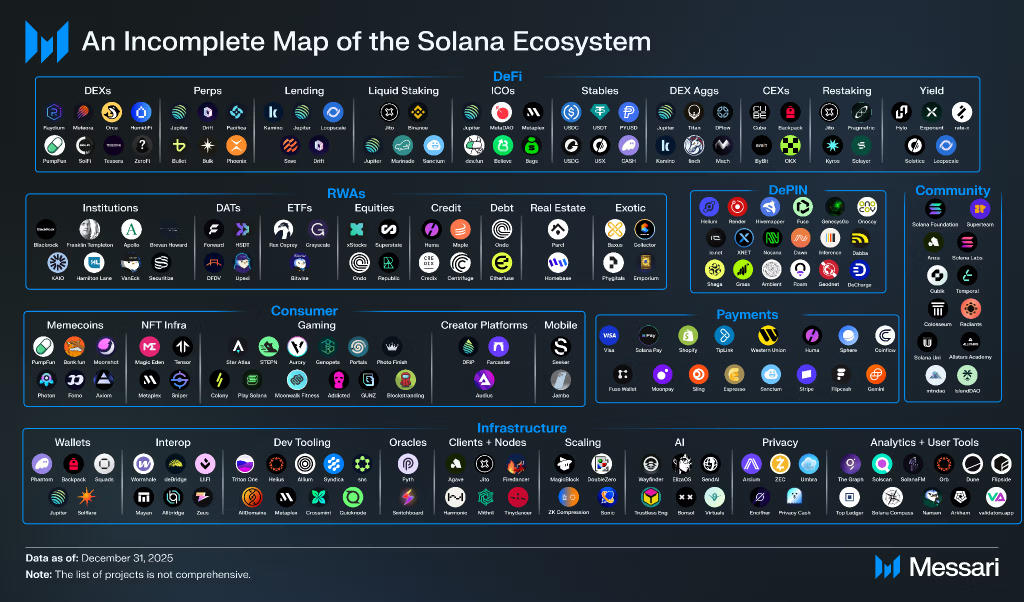
To understand Solana's current standing, it is helpful to compare its DeFi metrics against other high-performance ecosystems. The table below illustrates the competitive landscape, highlighting Solana's position in total value locked and daily trading volume relative to Ethereum Layer 2s and other major chains.
| Chain | TVL (USD) | Daily Volume (USD) | Avg. Tx Cost (USD) |
|---|---|---|---|
| Solana | $8.2B | $1.8B | $0.00025 |
| Arbitrum | $6.5B | $450M | $0.12 |
| Optimism | $3.1B | $280M | $0.15 |
| Base | $2.9B | $320M | $0.08 |
This data underscores the efficiency gains brought by the Firedancer upgrade. While competitors like Arbitrum and Optimism maintain strong TVL positions, Solana's significantly lower transaction costs and higher daily volumes indicate a preference for high-frequency activity. The network's ability to process thousands of transactions per second at a fraction of the cost of Ethereum L2s has made it the preferred chain for speculative trading and micro-transactions, driving the observed TVL growth.
NFT Market Trends and Volume
The Firedancer upgrade fundamentally alters the mechanics of high-frequency NFT trading by removing the latency bottlenecks that previously defined the market. In the 2026 landscape, where volume is driven by rapid minting events and split-second secondary sales, Firedancer’s parallel transaction processing allows for a throughput that legacy architectures cannot match. This low-latency environment transforms NFTs from static collectibles into fluid, high-velocity assets, directly contributing to sustained TVL growth within the ecosystem.
Traditional blockchain congestion often resulted in failed transactions or exorbitant gas fees during peak minting windows, effectively pricing out retail participants and limiting volume. Firedancer addresses this by ensuring consistent finality and predictable transaction costs, even during viral drops. This reliability encourages creators to launch more complex, high-frequency campaigns, knowing that the infrastructure will not collapse under demand. The result is a more liquid market where volume spikes are driven by genuine user activity rather than speculative botting exploiting network delays.
The impact on volume is evident in the shifting behavior of major NFT marketplaces on Solana. With the Firedancer upgrade stabilizing the base layer, platforms can support higher concurrent user loads without degradation. This has led to a noticeable increase in daily active traders and a reduction in failed trade attempts, creating a more robust environment for both creators and collectors. As the network continues to optimize for these use cases, the correlation between technical performance and market volume becomes increasingly direct.
Validator diversity and security risks
The rollout of the Firedancer upgrade marks a pivotal shift in the network’s architecture, but it introduces a complex challenge regarding validator client diversity. Currently, a significant portion of the network relies on the default validator client, Validator Client A. This concentration creates a "monoculture" risk, where a single software bug or logic error could potentially compromise the entire network’s consensus.
Firedancer serves as a second, independent validator client. Its presence is the primary mechanism for mitigating this risk. By offering a high-performance alternative, it allows node operators to diversify their software stacks. However, adoption is not immediate. The transition from a single-client dependency to a multi-client ecosystem requires time and incentive alignment for validators to switch over.
The Safety Rule Debate
The introduction of a second client has sparked intense debate around what analysts call the "safety rule." Traditional blockchain safety often relies on strict consensus mechanisms that penalize divergence. Critics argue that Solana’s approach, which prioritizes throughput and finality, may violate safety norms that other networks treat as non-negotiable.
The core concern is that Firedancer’s different execution logic might lead to temporary forks or consensus delays during high-stress periods. While the upgrade aims to improve performance, the community remains cautious about whether the network can maintain strict safety guarantees when two distinct clients are processing the same block history.
Evaluating Post-Upgrade Security
For investors and participants, the security posture of Solana post-upgrade depends on the speed of client diversification. A network with multiple independent clients is more resilient to software-specific failures. However, until a substantial majority of validators adopt Firedancer, the monoculture risk persists.
- Client Adoption Rate: Monitor the percentage of validators running Firedancer versus the default client.
- Consensus Stability: Watch for any unusual fork activity or consensus delays during high-traffic periods.
- Audit Transparency: Ensure that both clients have undergone rigorous, public audits by reputable third-party security firms.
The success of this upgrade hinges not just on raw speed, but on the network’s ability to distribute trust across diverse, independently coded validator software.
No comments yet. Be the first to share your thoughts!