
Solana 2026 Price Outlook and Market Context
Solana opened 2026 at $138, but the year has already tested the resolve of its holders. After hitting a January peak of $146, the asset has since fallen 42%, trading around $85 as of today. This sharp decline has shifted the narrative from simple momentum chasing to a more rigorous assessment of whether Solana can reclaim its previous highs or if it is settling into a new, lower valuation baseline.
The path to the widely cited $300 target is steep. For Solana to reach $200 by the end of 2026, it would need a 135% rally from current levels. Prediction markets reflect this skepticism; Polymarket data indicates only an 18.5% probability of Solana reaching $160 by year-end. While some analyst aggregates suggest a mean price near $445 with a high-end estimate of $1,000, these figures assume a sustained bull market that has not yet materialized.
The divergence between optimistic long-term forecasts and current market reality highlights the high-stakes nature of this cycle. Investors are not just betting on price appreciation; they are betting on Solana's ability to execute on its technical roadmap, particularly the rollout of Firedancer and the Alpenglow consensus mechanism. Until these upgrades demonstrate tangible improvements in throughput and reliability during periods of high network stress, the $300 target remains a distant goal rather than an imminent reality.
DePIN and AI agents driving real network usage
Solana is undergoing a structural shift from speculative trading to utility-driven demand. The network’s throughput is no longer just a metric for hype; it is a resource consumed by Decentralized Physical Infrastructure Networks (DePIN) and autonomous AI agents. This transition anchors the path to $300 in real economic activity rather than pure momentum.
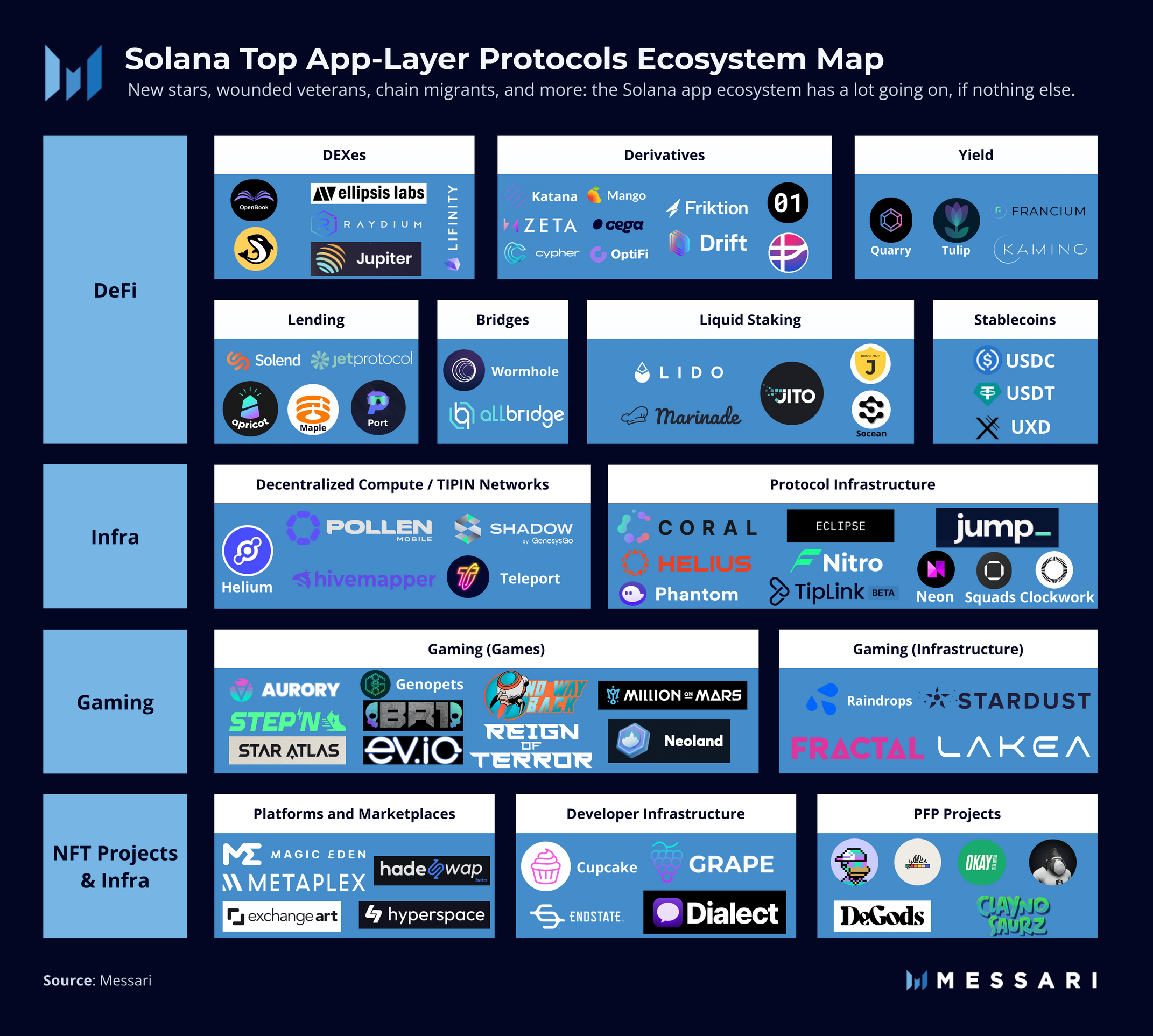
DePIN projects like Helium and Hivemapper are leveraging Solana’s low fees to handle millions of daily transactions. These networks require constant, micro-scale data verification, a workload that matches Solana’s parallel processing architecture. As physical infrastructure moves on-chain, the network absorbs consistent block space, creating a baseline of usage that survives market cycles.
AI agents add a different layer of complexity. Autonomous bots execute thousands of micro-transactions for data queries, model training, and decentralized compute markets. Unlike human traders who may pause during volatility, AI agents operate continuously. This creates a steady stream of on-chain activity that supports network fees and validator rewards regardless of short-term price action.
This utility-driven demand provides a buffer against the extreme volatility inherent in high-stakes crypto markets. While price swings remain a risk, the underlying consumption of block space by real-world applications and AI workloads establishes a more resilient economic model. The network’s value proposition is increasingly tied to its ability to process these complex, high-frequency interactions efficiently.
Firedancer and Alpenglow upgrades
Solana’s path to $300 hinges on technical infrastructure that can handle the immense throughput required by DePIN and AI agent networks. The network’s previous bottlenecks were not merely software quirks but structural limits that threatened reliability during peak demand. Two major upgrades—Firedancer and Alpenglow—are designed to dismantle these constraints, transforming Solana from a high-performance experiment into a robust settlement layer.
Firedancer, a new validator client built by Jump Crypto, is the most significant leap in Solana’s engineering history. Unlike the original client, Firedancer is written in C and operates independently of the core protocol’s execution layer. This separation allows for parallel processing of transactions, drastically reducing latency and increasing throughput potential to hundreds of thousands of transactions per second. The upgrade is critical for AI agents that require near-instantaneous, low-cost micro-transactions to function at scale. Without Firedancer, Solana’s congestion issues during high-volume periods would remain a liability for enterprise-grade applications.
Alpenglow, scheduled for later in the cycle, addresses the consensus layer. It aims to finalize blocks in under one second, a significant improvement over the current 12.8-second finality. This speed is not just a convenience; it is a requirement for real-time financial applications and autonomous AI systems that cannot tolerate the risk of reorgs or delayed confirmations. Together, these upgrades create a foundation where high-frequency DePIN data streams and AI-driven economic activity can coexist without gridlock.
The transition to this upgraded infrastructure is not without risk. Validator migration requires rigorous testing, and any failure in Firedancer’s integration could temporarily disrupt network stability. However, the potential upside is substantial. By solving the scalability trilemma, Solana positions itself to capture the high-throughput workloads that other blockchains cannot support. The $300 price target is not a speculative guess but a reflection of the network’s evolving capacity to serve the next generation of digital infrastructure.
Solana price scenarios for 2026
The path to $300 is just one of several trajectories analysts are mapping for Solana in 2026. While the broader market anticipates significant volatility, the specific price targets diverge sharply based on network adoption metrics and macroeconomic liquidity. The consensus range spans from a conservative $85 to a bullish $1,000, with the mean estimate hovering near $445 according to aggregated analyst data.
Bullish forecasts, often citing the potential for Solana to capture substantial market share from legacy smart contract platforms, project values exceeding $500. These scenarios assume seamless execution of upgrades like Alpenglow and sustained growth in DePIN and AI agent sectors. Conversely, conservative models from platforms like Changelly suggest a more modest ceiling, with some forecasts capping SOL near $96.68 by mid-2026 before potential corrections. Prediction markets also reflect this uncertainty, with Polymarket data indicating only an 18.5% probability of SOL reaching $160 by year-end, highlighting the risk of a prolonged consolidation phase.
To understand where SOL might land, it helps to compare the specific targets set by major forecasting entities. The table below outlines the range of expectations, from the most optimistic growth scenarios to the cautious baselines.
| Source | Scenario | 2026 Target | Key Driver |
|---|---|---|---|
| Aggregated Analysts | Bullish | $300 - $1,000 | High DePIN/AI adoption |
| Changelly | Conservative | ~$96.68 | Mid-2026 peak estimate |
| Binance | Moderate | $65 - $157 | June 2026 average |
| Polymarket | Market Probability | 18.5% chance of $160 | End-of-year probability |
These divergent views underscore that Solana’s price action will likely depend less on general crypto sentiment and more on its ability to execute on its technical roadmap. The gap between a $100 asset and a $1,000 asset is not just about hype; it is about whether the network can handle the transaction volume required to support a trillion-dollar market cap. Until the Alpenglow upgrade proves its scalability under real-world load, the conservative estimates remain the safer baseline for risk-averse investors.
The current market structure suggests that while the upside potential is significant, the probability of hitting the extreme high-end targets remains low in the near term. Investors should monitor on-chain activity and developer engagement as leading indicators, rather than relying solely on price predictions. The actual outcome will likely settle somewhere between the conservative floor and the bullish ceiling, depending on how quickly Solana can convert its technical advantages into tangible economic activity.
No comments yet. Be the first to share your thoughts!