
Solana 2026 trends in context
The conversation around Solana in 2026 is no longer about whether the network can survive; it is about how its architectural advantages will reshape decentralized finance. As the market looks toward the end of the decade, the focus has shifted from raw throughput metrics to the practical implications of hyper-parallel execution. This structural shift allows Solana to process transactions simultaneously rather than sequentially, creating a foundation for DeFi applications that demand both high speed and low latency.
Current market sentiment reflects this optimism, though price forecasts vary significantly based on adoption rates. Analysts project Solana’s value to range between $128 and $1,000 by 2026, with many centering their estimates near $445. These divergent views highlight the dependency of Solana’s success on broader macroeconomic conditions and the successful integration of its technology into mainstream financial workflows. The network’s ability to maintain stability under increased load will be the primary test of its long-term viability.
The core of this evolution lies in how parallel processing changes the user experience. In traditional blockchains, transactions wait in line, creating bottlenecks during high demand. Solana’s approach allows multiple transactions to be validated at once, effectively removing the congestion that has historically plagued other networks. This capability is not just a technical upgrade; it is a prerequisite for the complex, high-frequency trading strategies that will define the next generation of DeFi.
As we analyze the specific trends emerging for 2026, it is essential to view them through the lens of this underlying infrastructure. The trends are not isolated phenomena but are direct consequences of Solana’s ability to handle complex computations in parallel. This section establishes the baseline for understanding how these technological shifts will impact liquidity, user adoption, and the overall health of the ecosystem.
Hyper-parallel execution explained
Hyper-parallel execution is the architectural shift that allows Solana to process complex financial interactions without the bottlenecks that plague earlier parallel models. Traditional parallelism often requires transactions to be grouped into static batches or separated by strict resource locks to avoid conflicts. This approach works for simple transfers but fractures when multiple DeFi protocols need to read and write to the same state simultaneously. Hyper-parallel execution removes these rigid boundaries, allowing the network to identify and execute independent instructions concurrently while safely resolving dependencies in real time.
Think of this system like a modern kitchen with multiple chefs. In a traditional setup, all chefs must wait for one person to finish chopping onions before anyone else can touch the cutting board, or they must use separate, isolated stations that cannot share ingredients. Hyper-parallel execution is like a professional brigade where chefs coordinate dynamically. If one chef is sautéing and another is plating, they work in parallel. If both need the same sauce, the system routes the request to a single source and distributes the result instantly, preventing waste and delays. This coordination happens at the virtual machine level, ensuring consistency without forcing sequential processing.
For DeFi, this means that complex strategies—such as arbitrage across multiple exchanges or liquidations triggered by price feeds—execute in a single atomic step rather than being fragmented across several blocks. Applications can interact with deeper liquidity pools without suffering from the "mev" (maximal extractable value) extraction that often drains user profits on slower chains. The result is a environment where high-frequency trading, cross-protocol swaps, and real-time market data integration feel instantaneous.
The technical foundation relies on fine-grained locking and optimistic conflict resolution. Instead of banning concurrent access to shared state, the runtime allows it and validates the outcome only at the end of the transaction. If a conflict is detected, the system rolls back and retries only the conflicting instructions, keeping the rest of the computation intact. This efficiency is critical for supporting the next generation of DeFi applications that require both speed and composability.
Echo and the new liquidity layer
Solana Echo is shifting the focus from raw transaction speed to parallel execution, creating a new foundation for decentralized finance. This change matters because it allows the network to process independent tasks at the same time instead of waiting for each one to finish. For users and developers, this means the chain can handle more complex work without getting clogged.
The core benefit is how Echo handles liquidity. In the past, high activity often meant slower trades and higher fees for everyone. With parallel execution, liquidity providers can move assets more efficiently, and dApps can offer faster services. This is not just a technical upgrade; it is a structural change that makes Solana more reliable for serious financial applications.
To see the difference, compare the old way of doing things with the new parallel approach:
| Feature | Traditional Execution | Echo Execution |
|---|---|---|
| Processing | One after another | Simultaneous |
| Latency | High during peaks | Consistent |
| Throughput | Limited by single thread | Scales with hardware |
This shift helps Solana stay competitive as more projects move on-chain. The network is no longer just about speed; it is about capacity and stability. As Echo rolls out, we expect to see more sophisticated DeFi tools that rely on this new parallel infrastructure.
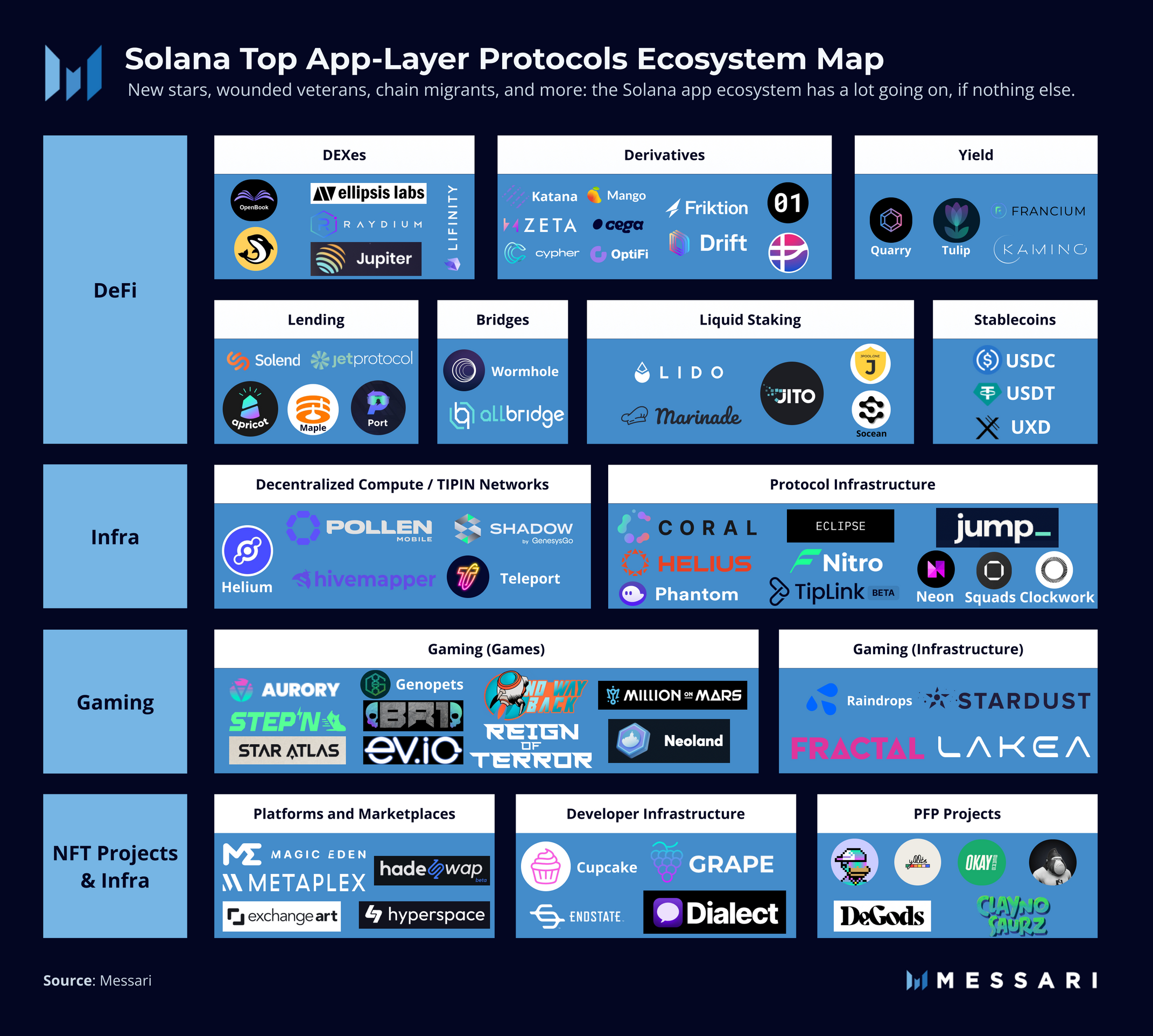
Best Solana dApps for 2026
The shift to parallel execution on Solana has moved the ecosystem from simple high-speed transactions to complex, multi-protocol interactions that were previously impossible. In 2026, the most valuable applications are those that leverage this throughput to reduce latency and cost across entire workflows. The following dApps represent the current leaders in liquidity, infrastructure, and user experience, all optimized for the new parallel execution environment.
Jupiter (JUP)
Jupiter remains the essential entry point for Solana, acting as the primary liquidity aggregator. It routes trades across multiple decentralized exchanges to ensure the best prices and lowest slippage. With parallel execution, Jupiter’s limit orders and complex trading strategies execute with near-instant finality. This makes it the most reliable tool for high-volume DeFi activity.
Raydium (RAY)
Raydium continues to dominate as the leading automated market maker (AMM) on Solana. It provides deep liquidity for new token launches and established pairs. The platform’s integration with Serum’s order book architecture allows for hybrid trading models. In 2026, Raydium’s efficiency in handling parallel swaps makes it a core component for any serious Solana trader.
Marinade Finance (MNDE)
Liquid staking has become a foundational layer of Solana’s DeFi stack, and Marinade is the standard. It allows users to stake SOL while receiving mSOL tokens, which can be used in other protocols. This dual utility unlocks capital efficiency. Marinade’s robust infrastructure ensures that staking rewards are distributed reliably, even during periods of high network congestion.
Helium (HNT)
Helium’s migration to Solana demonstrated the network’s ability to handle real-world asset (RWA) data at scale. The decentralized wireless network relies on Solana’s high throughput to process millions of small data transfers from IoT devices. This use case highlights Solana’s potential beyond finance, proving its viability for global infrastructure projects.

Hardware Security
Interacting with these high-throughput dApps requires secure management of private keys. Hardware wallets provide an offline environment for signing transactions, protecting assets from digital threats. For users engaging with Solana DeFi, a dedicated hardware wallet is a necessary precaution.


As an Amazon Associate, we may earn from qualifying purchases.
What is the best Solana project 2026?
Determining the "best" Solana project depends on whether you prioritize infrastructure, yield, or speculative growth. However, if we define "best" by daily utility, transaction volume, and foundational importance to the ecosystem, Jupiter stands out as the dominant force. It is not merely a token; it is the critical plumbing that makes trading on Solana efficient for everyone.
Jupiter acts as a decentralized exchange (DEX) aggregator. Instead of forcing users to check multiple venues for the best rate, Jupiter scans the entire Solana landscape—Jupiter’s own limit orders, Raydium, Orca, and others—to slice orders and find the optimal price. This minimizes slippage and saves users money on every swap. For a network processing millions of transactions daily, this aggregation layer is as vital as a central bank’s clearinghouse.
The ecosystem also relies on specialized players like Jito, which facilitates MEV (Maximal Extractable Value) redistribution, and Marinade Finance, which simplifies liquid staking. Yet, Jupiter’s role as the primary entry and exit point for capital gives it a network effect that is difficult to replicate. Its JUP token governance and revenue-sharing model further cement its status as a cornerstone of the 2026 Solana economy.
No comments yet. Be the first to share your thoughts!