
Why Solana 2026 Trends Matter
The conversation around Solana 2026 trends is shifting from pure price speculation to fundamental ecosystem growth. While early adoption was driven by retail traders seeking speed and low fees, the narrative is now anchored in infrastructure maturity and institutional utility. The arrival of Firedancer, a new independent validator client, is the single most significant development in Solana's history, promising to decouple performance from single-client bugs and potentially increasing throughput to over one million transactions per second.
This technical leap is not happening in a vacuum. It coincides with a broader institutional embrace of Solana as a settlement layer for real-world assets and high-frequency consumer applications. Unlike previous cycles driven by meme coins and speculative NFTs, the current trajectory is supported by concrete products: high-throughput decentralized exchanges like Jupiter, stablecoin infrastructure anchored by USDC, and enterprise-grade payment rails. These are not abstract categories but working systems handling billions in volume.
The risk level remains high, as with any emerging blockchain, but the barrier to entry for failure has risen. Firedancer’s testnet performance and the depth of liquidity on Solana’s top protocols create a moat that is difficult for competitors to cross. For investors and developers, the focus is no longer on whether Solana will survive, but on which specific protocols will capture the value generated by this new scale.
The 2026 outlook suggests a maturation phase. Price predictions vary widely, with some estimates placing SOL between $300 and $1,000, while more conservative forecasts suggest a floor near $128. However, these numbers are secondary to the structural changes. The ecosystem is moving from a "wild west" of experimentation to a regulated, high-utility environment where Solana 2026 trends are defined by stability, speed, and real-world integration.
Top Solana DeFi protocols for 2026
As the Solana ecosystem matures, the focus for 2026 shifts from raw transaction speed to sustainable yield and institutional-grade infrastructure. The most promising DeFi protocols are those that have solved the fragmentation problem, offering deep liquidity across lending, trading, and prediction markets. These platforms are not just surviving the bear market; they are building the rails for the next cycle of capital inflow.
Jito: Liquid Staking and MEV
Jito has redefined staking on Solana by combining liquid staking with Maximal Extractable Value (MEV) redistribution. Instead of leaving potential revenue on the table, Jito captures MEV from transaction ordering and distributes it to stakers, effectively boosting yield beyond the base staking rate. For 2026, Jito’s integration with the Firedancer validator client positions it as a critical piece of infrastructure, ensuring that stakers receive both network rewards and optimized transaction fees.
Raydium: The Liquidity Hub
Raydium remains the primary automated market maker (AMM) on Solana, serving as the liquidity backbone for most new token launches. Its hybrid model, combining on-chain order books with AMM pools, offers traders the depth of a centralized exchange with the transparency of decentralization. As Solana’s user base grows, Raydium’s role in facilitating seamless swaps for emerging assets makes it an indispensable tool for both retail and institutional participants looking to manage the ecosystem’s expanding market.
Drift Protocol: Institutional-Grade Perpetuals
Drift Protocol has carved out a niche as a leading perpetuals exchange on Solana, offering low-latency trading with on-chain transparency. Unlike traditional CEXs, Drift allows users to maintain custody of their assets while accessing leveraged positions. With 2026 bringing increased institutional interest in crypto derivatives, Drift’s robust risk management systems and deep liquidity pools make it a preferred choice for traders seeking the efficiency of centralized platforms without the counterparty risk.
Solana Foundation Hardware Wallet Support
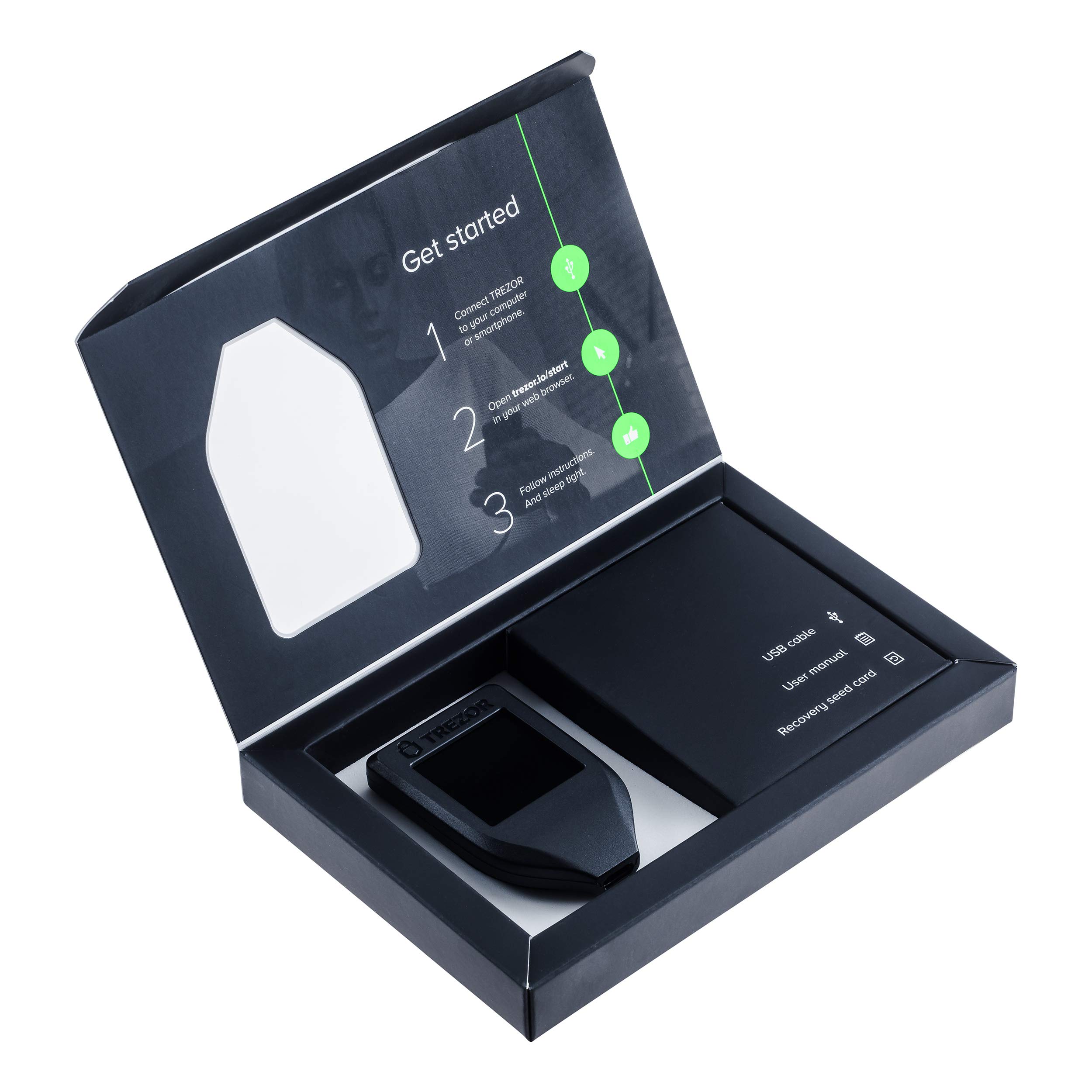
Securing your assets is the first step in participating in these protocols. The following hardware wallets are recommended for holding Solana (SOL) and SPL tokens, ensuring your private keys remain offline and secure during DeFi interactions.


As an Amazon Associate, we may earn from qualifying purchases.
Stablecoins and institutional momentum
Stablecoins are the plumbing of Solana’s financial infrastructure, and their volume is accelerating. As the network attracts institutional capital, the demand for fast, low-cost settlement layers grows. Unlike competitors where high fees can erode thin margins, Solana’s architecture supports high-frequency trading and large-scale transfers without the friction that plagues older chains.
The shift toward institutional adoption hinges on predictability and speed. Solana’s consistent block times and sub-cent transaction costs make it a preferred choice for payment processors and treasury management tools. This efficiency allows enterprises to move capital globally without the latency and expense associated with legacy banking rails or congested smart contract platforms.
To understand how Solana stacks up against the competition, consider the fundamental metrics that drive institutional decision-making. The following comparison highlights why Solana is becoming the default layer for stablecoin-heavy workflows.
| Network | Avg. Transaction Fee | Theoretical TPS | Settlement Time |
|---|---|---|---|
| Solana | <$0.01 | 65,000+ | <400ms |
| Ethereum | $1.00 - $10.00+ | ~15-30 | ~12-15s |
| Polygon | <$0.01 | ~65,000 | ~2s |
| Avalanche | <$0.01 | ~4,500 | ~1-2s |
NFT market evolution and digital assets
The Solana NFT market is undergoing a fundamental shift in 2026, moving away from speculative trading toward utility-driven digital assets. While the early years were defined by high-volume flipping and profile picture collections, the current landscape favors projects that offer tangible value, such as membership access, gaming integration, or real-world asset tokenization. This transition mirrors the broader maturation of the Solana ecosystem, where developer retention and global growth are prioritizing sustainable utility over hype.
This evolution is evident in the rise of creator economy tools and protocol-native features that lock value into the asset rather than the transaction. Projects like Mad Lads and Tensor have set new standards for community governance and secondary market efficiency, demonstrating that digital assets can function as active financial instruments. As stablecoins and institutional momentum grow on Solana, NFTs are increasingly being used for fractional ownership and liquidity provision, reducing the volatility that once characterized the space.
For collectors and investors, the focus is now on assessing the underlying utility of a collection. Are the assets integrated into a broader ecosystem? Do they provide ongoing rewards or access? The answer to these questions will determine which digital assets survive the market cycle. As the market stabilizes, we expect to see a consolidation of value around protocols that offer clear, long-term benefits.
Firedancer and Alpenglow upgrades
Solana’s trajectory in 2026 rests on two foundational technical upgrades: Firedancer and Alpenglow. These are not mere feature updates but architectural overhauls designed to remove the bottlenecks that previously constrained the network. By decoupling validation from the core runtime, Solana is moving toward a multi-client ecosystem that prioritizes extreme throughput and resilience.
Firedancer, developed by Jump Crypto, introduces a new validator client written in C. This separation means that if one client fails, the network continues operating, eliminating the single point of failure inherent in the original Solo client. The upgrade significantly increases transaction processing capability, aiming for 1 million transactions per second on a single channel. This raw capacity is essential for supporting the high-frequency DeFi protocols and enterprise applications that define the 2026 landscape.
Alpenglow complements this by modernizing the consensus mechanism. It transitions Solana from its earlier Proof-of-History model to a more robust Proof-of-Stake consensus layer, improving finality and reducing latency. Together, these upgrades provide the infrastructure stability required for institutional-grade DeFi applications to thrive without network congestion.
Frequently Asked Questions About Solana in 2026
Will Solana hit $100 in 2026?
Current technical analysis suggests a more conservative trajectory. Based on recent EMA structures, Solana's 2026 price range is projected between $75 and $86, with key support levels around $74.83. While a breakout above $100 is possible if broader market conditions shift, the immediate outlook points to consolidation within this lower band.
Is Solana safe to use for DeFi in 2026?
Solana has maintained a high uptime record since its major network upgrades, addressing earlier stability concerns. For users, safety largely depends on using reputable protocols like Jupiter or Marinade. Always verify contract addresses and use hardware wallets to secure assets, as the network itself remains one of the most active and liquid ecosystems.
How does Solana compare to Ethereum in 2026?
Solana continues to dominate in transaction speed and low fees, making it the preferred chain for high-frequency trading and micro-transactions. Ethereum remains the leader for institutional settlement and high-value storage. Many users now hold assets on both chains, using Solana for daily DeFi interactions and Ethereum for long-term holdings.
No comments yet. Be the first to share your thoughts!