
Solana DeFi 2026 landscape overview
The Solana ecosystem in 2026 has shifted from chasing raw transaction speed to prioritizing predictability, resilience, and execution integrity. This transition marks a maturation phase where the network is positioning itself as institutional-grade infrastructure rather than just a high-throughput consumer chain. The technical roadmap now emphasizes stable finality and validator client diversity, creating a foundation suitable for serious capital deployment.
Stablecoin activity remains the primary engine for this growth. The total stablecoin supply recently printed a new all-time high of $16.8 billion, with USDC maintaining a dominant 53% market share. This surge in stablecoin liquidity provides the necessary depth for large-scale DeFi operations, distinguishing Solana from other chains that rely heavily on volatile native token speculation.
Leading protocols are already adapting to this institutional shift. Kamino Finance stands as the largest single DeFi protocol on Solana by total value locked, with its Kamino Lend layer holding $1.48 billion across isolated markets for assets like SOL, USDC, and JUP. Similarly, Jupiter continues to dominate trading volume, acting as the critical liquidity aggregator that connects these capital markets.
While broader DeFi metrics on the network have seen some contraction in non-stablecoin sectors, the underlying infrastructure is stronger. The focus is no longer just on user acquisition but on building robust, fair, and resilient financial primitives. This environment sets the stage for the specific protocols driving the next wave of growth, where utility and stability outweigh speculative hype.
5 Solana DeFi Protocols Driving 2026 Growth
Solana’s decentralized finance ecosystem is consolidating around high-liquility infrastructure, with protocols like Jupiter and Kamino capturing dominant shares of daily trading volume and total value locked. This section analyzes five specific platforms driving 2026 growth, grounding the assessment in current dashboard metrics and official TVL rankings rather than speculative price targets.
1. Jupiter: The DeFi Super-App
Jupiter aggregates liquidity across Solana, offering the deepest execution for swaps and limit orders. Its Studio feature empowers developers to build financial products on-chain. With consistent top-tier volume rankings, Jupiter remains the primary gateway for efficient capital movement in the ecosystem.
2. Kamino Finance: Leading Lending Market
Kamino Finance dominates Solana’s lending sector by offering optimized yield strategies and robust liquidity pools. It allows users to supply assets for interest or borrow against collateral with competitive rates. As a foundational DeFi primitive, Kamino’s high total value locked (TVL) underscores its critical role in capital efficiency.
3. Raydium: Deep Liquidity DEX
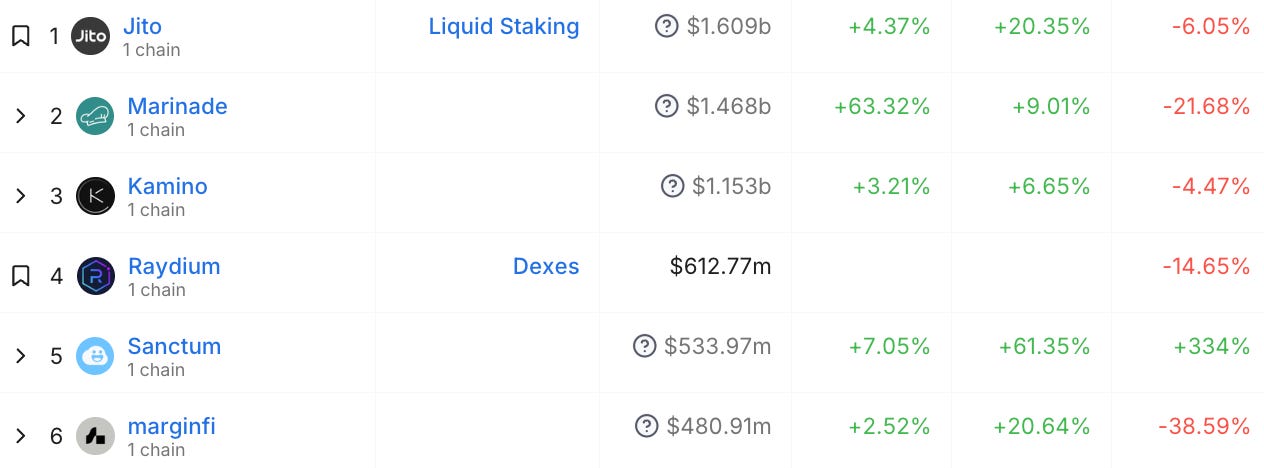
Raydium provides deep liquidity for automated market makers and order book trading on Solana. It serves as a key venue for token launches and spot trading, attracting significant daily volume. Its integration with Serum’s legacy order book structure offers traders precise execution capabilities for major pairs.

4. Jito: MEV Liquid Staking
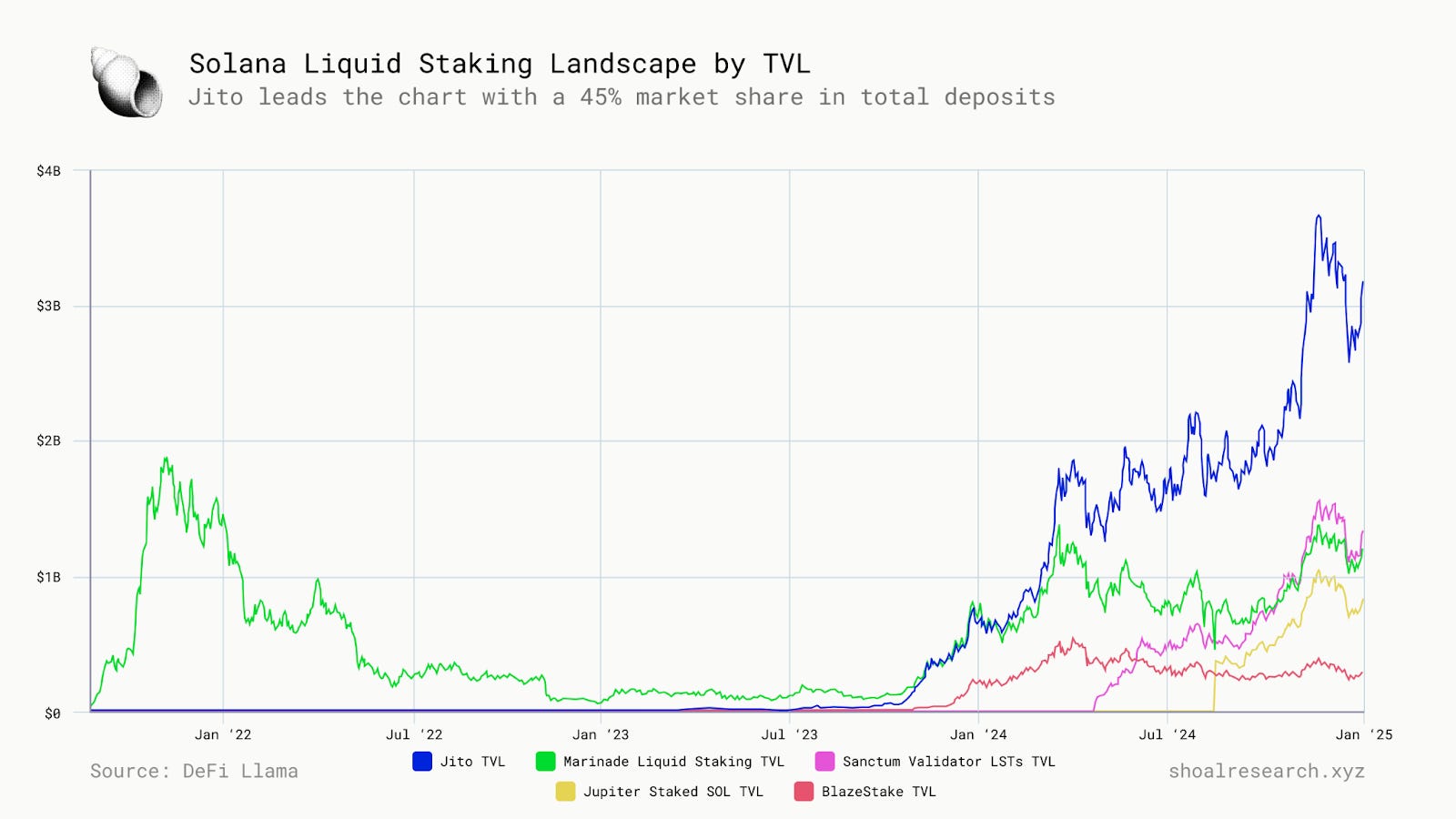
Jito revolutionizes staking by integrating MEV rewards directly into staked SOL, enhancing yields for validators and delegators. It offers a liquid staking token (JitoSOL) that maintains value while earning these additional rewards. This mechanism makes Jito a preferred choice for users seeking maximized returns on their staked assets.
- MEV reward integration
- Liquid staking token
- Enhanced staking yields
5. Sanctum: Institutional Staking Infrastructure
Sanctum introduces Liquid Staking Derivatives (LSDs) with a focus on institutional-grade security and composability. It allows for the tokenization of various staked assets, enabling deeper integration into DeFi protocols. By standardizing LSDs, Sanctum addresses fragmentation and enhances the utility of staked capital across the Solana ecosystem.

Comparing Solana DeFi 2026 leaders
The Solana ecosystem’s top five protocols by total value locked (TVL) serve distinct roles in the DeFi stack. Understanding their primary functions and current market positions helps align your capital with the right infrastructure.
Kamino leads the sector as the largest lending protocol, while Jupiter dominates liquidity aggregation. Raydium and Orca handle the bulk of spot trading, and Marinade specializes in liquid staking. The table below outlines their core metrics based on 2026 dashboard data.
| Protocol | Primary Function | TVL (Approx.) | Key Use Case |
|---|---|---|---|
| Kamino | Lending & Borrowing | $1.48B+ | Isolated lending markets for SOL, USDC, and JUP |
| Jupiter | DEX Aggregator | $1.1B+ | Best execution for swaps and limit orders |
| Raydium | AMM DEX | $800M+ | Concentrated liquidity pools for spot trading |
| Marinade | Liquid Staking | $600M+ | Staking SOL while retaining liquidity |
| Orca | Concentrated AMM | $400M+ | Capital-efficient liquidity provision |
These figures reflect real-time on-chain activity. For traders, Jupiter’s aggregation engine remains the default for speed and slippage protection. Lenders and borrowers should monitor Kamino’s isolated markets for risk segmentation. Stakers looking for yield without locking assets should review Marinade’s APY fluctuations against network conditions.
Solana defi 2026 common: what to check next
Addressing the most frequent inquiries regarding Solana’s market trajectory, technical roadmap, and protocol hierarchy helps clarify the current state of the ecosystem.
What is the largest DeFi protocol on Solana? Kamino is the largest single DeFi protocol on Solana by total value locked (TVL). The Kamino Lend layer, introduced with Kamino 2.0, holds $1.48 billion across isolated lending markets supporting major assets including SOL, USDC, USDT, JUP, and PYUSD [src-serp-1].
What is the 2026 roadmap for Solana? Solana’s 2026 technical roadmap prioritizes predictable finality, execution integrity, and latency improvements over raw transaction speed increases. These enhancements aim to establish the network as institutional-grade infrastructure for an Internet-native capital market [src-serp-3].
How low can Solana go in 2026? Market sentiment for September 2026 projects a minimum trading range of $48.09, with an average prediction of $95.85 [src-serp-1]. These figures reflect analyst projections rather than guaranteed outcomes.
Could Solana hit $10,000? A $10,000 price point for SOL is considered highly unlikely by current market analysis. Such a valuation would require a market capitalization that exceeds the total value of most traditional financial assets, making it an outlier scenario rather than a baseline expectation.
Helpful gear
Use these product recommendations as a starting point, then choose the size, material, and price point that fit how you actually use the gear.


As an Amazon Associate, we may earn from qualifying purchases.
No comments yet. Be the first to share your thoughts!