

Solana 2026 price outlook
Analyst predictions for Solana in 2026 span a wide range, reflecting the asset's volatility and the divergent views on its long-term adoption. Current market sentiment suggests a mean estimate near $445, with most trusted analysts projecting a trading range between $300 and $1,000. This consensus is anchored by live market data and institutional forecasts.
Standard Chartered recently adjusted its outlook, cutting its 2026 target to $250 while maintaining a long-term bullish case for $2,000 by 2030. This divergence highlights the uncertainty surrounding Solana's ability to sustain its current growth trajectory. Binance's aggregated predictions for September 2026 place the asset between $52.83 and $146.92, indicating a more conservative short-term view compared to the annual average.
| Source | 2026 Target | Context |
|---|---|---|
| Standard Chartered | $250 | Cut from previous forecast |
| Analyst Consensus | $300-$1,000 | Mean estimate near $445 |
| Binance (Sept) | $52.83-$146.92 | Short-term range |
The disparity between institutional targets and short-term exchange predictions underscores the importance of distinguishing between long-term value and near-term market noise. Investors should monitor these signals alongside technical indicators to gauge Solana's potential performance in 2026.
Solana 2026 price targets compared
Institutional and algorithmic forecasts for Solana in 2026 vary significantly, reflecting the asset's volatility and the diverse models used to value it. While some major banks project substantial upside, independent aggregators and other exchanges suggest a more conservative near-term trajectory. Understanding this variance is essential for contextualizing market sentiment.
Standard Chartered has adjusted its outlook, cutting its primary 2026 target to $250 while maintaining a long-term $2,000 bullish case. In contrast, Binance and Changelly provide monthly projections that suggest a wider trading range for the latter half of 2026, with Binance projecting an average between $52.83 and $146.92 for September. CoinDCX offers a mid-range estimate, expecting a gradual recovery to the $260–$320 band.
The table below summarizes these conflicting projections, highlighting the wide spread between conservative algorithmic models and aggressive institutional targets.
| Source | 2026 Target | Range/Context | Forecast Type |
|---|---|---|---|
| Standard Chartered | $250 | Up to $2,000 long-term | Institutional |
| CoinDCX | $260–$320 | Gradual uptrend | Exchange Analysis |
| Binance | ~$100 avg | $52–$147 (Sep 2026) | Aggregator |
| Changelly | ~$95 max | $50–$95 (Sep 2026) | Algorithmic |
Firedancer and Alpenglow upgrades
Solana’s long-term trajectory relies less on speculative hype and more on the robust infrastructure upgrades arriving in 2026. The network is transitioning from a high-throughput experimental chain to a resilient financial rail through two distinct technical catalysts: the Firedancer validator client and the Alpenglow consensus mechanism. These developments address the primary criticisms of the network’s historical stability while expanding its capacity for institutional-grade applications.
Firedancer, developed by Jump Crypto, represents a fundamental shift in how Solana processes transactions. Unlike the current validator client, which is written in Rust and shared by all validators, Firedancer is a completely independent implementation written in C. This separation is critical for network security; it ensures that a single software bug cannot cause a network-wide outage, a risk present in homogeneous validator ecosystems. By introducing a second, high-performance client, Solana effectively doubles its resilience against technical failures while significantly increasing its theoretical transaction processing capacity.
Complementing Firedancer is Alpenglow, the next-generation consensus upgrade scheduled for implementation alongside or shortly after Firedancer. Alpenglow simplifies the consensus layer by removing the complex stake-weighted voting mechanisms of the current Tower BFT. This streamlining reduces latency and finality times, making the network more predictable for high-frequency trading and real-time financial applications. The combination of Firedancer’s redundancy and Alpenglow’s efficiency creates a technical foundation capable of supporting the scale required by traditional finance.
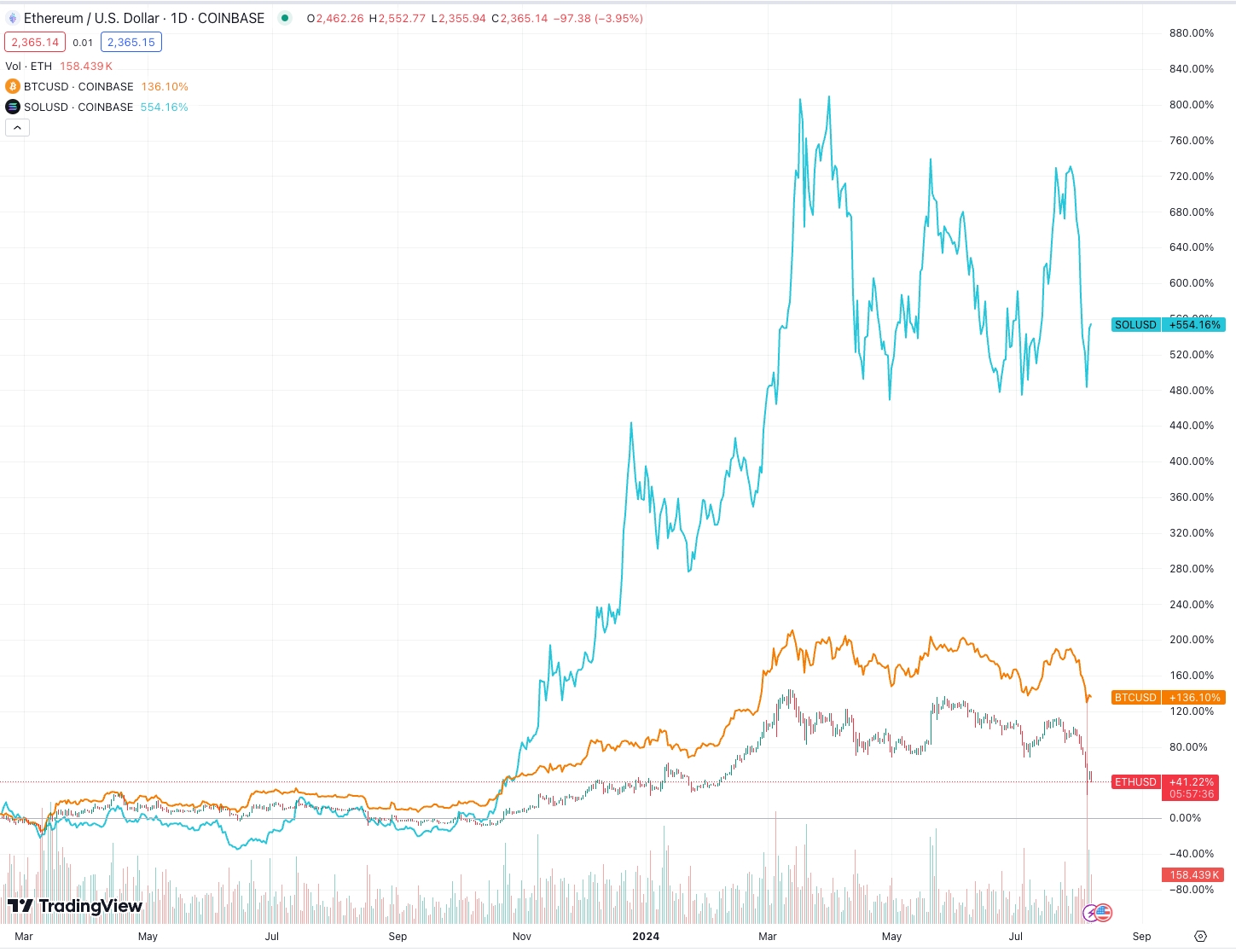
The market is already pricing in these infrastructure improvements. While current price action reflects short-term market volatility, the underlying technical roadmap suggests a structural revaluation of Solana’s utility. Institutional players are closely monitoring these upgrades as prerequisites for deeper integration, viewing the 2026 network state as a mature, enterprise-ready platform rather than a speculative asset.
Institutional adoption trends
The institutional narrative surrounding Solana has shifted from speculative curiosity to serious capital allocation, though recent adjustments to price targets reveal a cautious undercurrent. Major financial firms are no longer ignoring the network's throughput and low transaction costs, but they are tempering their near-term expectations with a focus on regulatory clarity and network stability.
Standard Chartered recently revised its 2026 price target for Solana down to $250, a move that signals a more grounded assessment of the asset's near-term trajectory. This cut contrasts sharply with their long-term $2,000 projection for 2030, highlighting a belief in Solana's eventual maturation as an institutional-grade settlement layer rather than a short-term trading vehicle.
Meanwhile, Morgan Stanley's evolving stance adds another layer of complexity to the institutional signal. By integrating Solana into broader digital asset research frameworks, the bank acknowledges the network's growing relevance in the fintech ecosystem. This dual signal—Standard Chartered's near-term caution paired with Morgan Stanley's structural inclusion—suggests that institutions are preparing for Solana's integration into traditional finance portfolios, even as they navigate immediate market volatility.
Key risks to Solana 2026
Solana’s path toward institutional adoption faces structural headwinds that could disrupt its growth trajectory. While network upgrades have improved stability, the history of outages remains a primary concern for enterprise users requiring guaranteed uptime. Any recurrence of significant network failures would erode trust and delay the integration of Solana into traditional financial infrastructure.
Competitive pressure is intensifying as other layer-1 blockchains and layer-2 solutions capture market share. Ethereum’s scaling roadmap and emerging competitors offer viable alternatives for developers and users, potentially fragmenting the liquidity and activity that Solana currently concentrates. This competition limits Solana’s ability to maintain its current valuation multiples if network activity stagnates.
Regulatory uncertainty also poses a material risk. As the SEC and other global regulators refine their stance on digital assets, Solana’s classification could shift, impacting its accessibility to institutional capital. Unlike established assets with clear legal precedents, Solana’s regulatory status remains fluid, creating a cloud over long-term investment decisions.
Solana 2027 Price Prediction
Looking beyond the 2026 horizon, market analysts project Solana (SOL) to reach an average price of $87.09 in 2027. This forecast, derived from current growth trajectories, suggests a moderate consolidation phase following the expected volatility of 2026. Institutional interest remains a primary driver, with platforms like Binance and Kraken integrating this figure into their long-term valuation models.
While the 2027 target is lower than some 2026 peaks, it reflects a stabilization of network utility and transaction volumes. The prediction assumes continued adoption of DeFi protocols and NFT marketplaces on the Solana blockchain without significant regulatory headwinds. Investors should view this as a baseline scenario rather than a guaranteed outcome, as crypto markets remain highly sensitive to macroeconomic shifts.
No comments yet. Be the first to share your thoughts!