

The shift to agentic infrastructure
Use this section to make the Solana AI Agents decision easier to compare in real life, not just on paper. Start with the reader's actual constraint, then separate must-have requirements from details that are merely nice to have. A practical choice should survive normal use, maintenance, timing, and budget. If a recommendation only works in an ideal situation, call that out plainly and give the reader a fallback path.
The simplest way to use this section is to write down the must-have criteria first, then compare each option against those criteria before weighing nice-to-have features.
Key AI agent use cases on Solana
Solana’s infrastructure supports a distinct class of AI agents that operate autonomously, bridging the gap between large language models and on-chain execution. These agents do not merely suggest actions; they execute them across trading, decentralized finance (DeFi), and data sourcing. The Solana Foundation identifies this shift as the foundation of the "agentic internet," where economic activity is increasingly driven by autonomous code rather than human clicks.
To understand the scale of this adoption, consider the price action of the underlying asset fueling these transactions.
The infrastructure enabling this autonomy is largely open-source. The Solana Agent Kit, maintained by SendAI, provides a toolkit that allows any AI model to perform over 60 distinct Solana actions. This includes interacting with smart contracts, managing tokens, and executing trades without human intervention. Pre-built skills allow agents to understand the context of various DeFi protocols, reducing the friction of integration.
Autonomous trading
The most immediate application of Solana AI agents is in autonomous trading. Unlike traditional algorithmic trading bots that rely on rigid, pre-coded rules, AI agents can analyze market sentiment and execute trades based on dynamic inputs. These agents often operate within their own smart wallets, managing risk and rebalancing portfolios in real-time.
For example, projects like Milo function as AI portfolio managers that hold their own smart wallets. They can interpret market data and execute trades directly on Solana, bypassing the need for manual approval for every transaction. This autonomy allows for high-frequency trading strategies that react to market changes in milliseconds, leveraging Solana’s low latency.
DeFi interaction
Beyond trading, AI agents are becoming primary actors in DeFi protocols. They interact with lending platforms, liquidity pools, and yield aggregators to optimize returns. By continuously monitoring protocol parameters, these agents can rebalance positions, claim rewards, and hedge risks without human oversight. This capability transforms DeFi from a passive investment tool into an active, self-managing financial engine.
The efficiency of these interactions is stark when compared to traditional methods. AI agents can execute complex, multi-step transactions that would be prohibitively expensive or time-consuming for humans to perform manually.
| Action | Human-Led | AI Agent-Led |
|---|---|---|
| Trade Execution | Manual, seconds to minutes | Autonomous, milliseconds |
| Cost | Higher gas fees due to errors | Optimized, minimal gas |
| Frequency | Limited by attention span | Continuous, 24/7 |
Data sourcing and verification
AI agents also serve as critical data nodes on Solana. They can query on-chain data, verify smart contract states, and aggregate information from multiple sources to inform decision-making. This capability is essential for agents that need to assess the health of a protocol before interacting with it. By sourcing and verifying data autonomously, agents reduce the risk of interacting with malicious or compromised contracts.
The Solana network has already processed approximately 15 million blockchain payments initiated by AI agents, according to the Solana Foundation. This volume underscores the practical utility of these agents in real-world economic activities, from micro-transactions to complex financial operations. As the ecosystem matures, the role of AI agents will likely expand, driving further innovation in decentralized applications.
RWA and DePIN Infrastructure
Solana AI agents require more than just computational power; they need a reliable stream of real-world data and a mechanism to transact against physical value. Real-World Asset (RWA) tokenization and Decentralized Physical Infrastructure Networks (DePIN) provide this missing link, transforming abstract digital logic into tangible economic action.
DePIN networks allow AI agents to autonomously procure services from the physical world. Instead of relying on centralized APIs, agents can verify hardware uptime, sensor data, or bandwidth availability through decentralized protocols. This creates a verifiable data layer that agents trust, enabling them to make decisions based on real-time physical conditions rather than simulated environments.
RWA tokenization bridges this data with value. By representing assets like real estate, commodities, or treasury bills on-chain, Solana provides a settlement layer where AI agents can hold collateral, execute trades, and manage liquidity. This allows agents to operate with financial autonomy, backing their actions with real-world equity rather than speculative tokens alone.
The synergy between these two layers creates a robust foundation for the agentic internet. Agents gather data from DePIN, validate it, and then execute transactions against RWA-backed assets. This loop of data acquisition and value exchange is where autonomous economic activity truly scales.
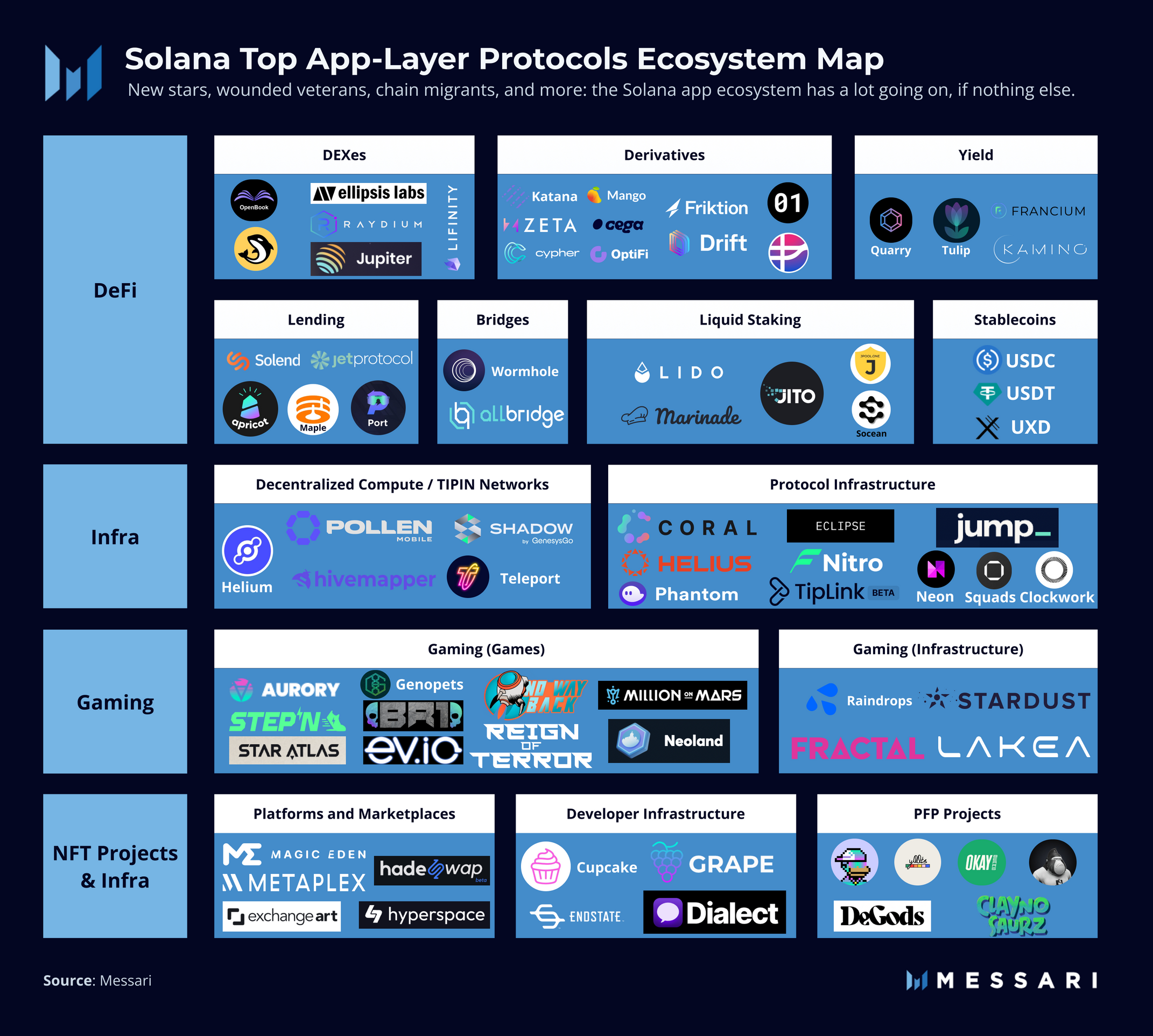
Solana’s high throughput and low fees make it the ideal settlement layer for this activity. As AI agents increase in frequency and complexity, the network’s ability to handle millions of micro-transactions ensures that RWA and DePIN interactions remain efficient and cost-effective.
Technical toolkit and security models
Building reliable Solana AI agents requires more than just LLM integration; it demands a robust infrastructure layer that balances autonomy with strict security boundaries. The ecosystem has evolved from experimental prototypes to structured toolkits designed for high-frequency, high-stakes operations.
The Solana Agent Kit serves as the primary interface for connecting AI models to the blockchain. This open-source toolkit allows agents to autonomously execute over 60 distinct actions, ranging from token swaps and staking to complex DeFi interactions. By standardizing these interactions, the kit reduces the friction of integrating Solana protocols into any AI architecture, enabling agents to operate independently across the network Solana Agent Kit.
However, autonomy introduces significant security risks. A compromised key can lead to irreversible losses, making policy-controlled wallets essential for agent operations. Solutions like Turnkey allow developers to define strict transaction policies, ensuring that agents can only perform pre-approved actions. This approach creates a secure perimeter around autonomous activity, preventing unauthorized transfers while maintaining the speed required for agentic workflows Helius on Secure Agents.
As transaction costs remain a critical factor for high-frequency agent activity, understanding the current market context is vital. The following widget displays the live price of SOL, which directly impacts the economic viability of automated micro-transactions.
2026 Market Outlook for Solana AI Agents
The infrastructure narrative for Solana AI agents is shifting from theoretical potential to measurable economic activity. As the "agentic internet" thesis gains traction, the primary value proposition is no longer just human-to-human transactions, but machine-to-machine commerce at scale. Solana’s low-latency, high-throughput architecture addresses the critical friction points that previously hindered autonomous AI interaction on-chain.
The network has already processed approximately 15 million agent-initiated transactions, signaling early adoption among AI developers seeking reliable execution layers. This volume suggests that Solana is becoming a default settlement layer for autonomous agents that require micro-transactions and rapid state updates. The shift from human-driven to agent-driven traffic fundamentally changes the network's demand dynamics, moving toward a model where computational utility drives token value.
Market capitalization for the broader AI agent sector currently stands at roughly $2.76 billion, indicating significant room for expansion as these agents integrate with real-world assets and services. For investors and developers, the focus is on identifying infrastructure providers that can sustain this agentic load without compromising decentralization or security.
No comments yet. Be the first to share your thoughts!