
Define your Solana 2026 trends thesis
Evaluate Solana Trends for Portfolio Strategy works best when the purchase path is explicit. Verify the source, compare the offer against real alternatives, check the total cost, and confirm what happens after payment before you decide. After each comparison, write down the one risk that would change your mind. If the seller, condition, support, warranty, shipping, or upkeep still feels uncertain, resolve that question before moving to checkout.
The simplest way to use this section is to verify the seller, compare the total cost, and resolve the biggest risk before you commit.
Assess infrastructure upgrades and finality
Evaluating Solana 2026 trends requires looking past price speculation and examining the underlying technical shifts. The transition from a speed-first narrative to one focused on reliability and deterministic finality is the primary indicator of institutional readiness. Two major upgrades—Firedancer and Alpenglow—form the backbone of this infrastructure evolution.
Step 1: Evaluate Firedancer’s impact on transaction reliability
Firedancer is a new validator client developed by Jump Crypto designed to run alongside the native Solana validator. Unlike the current single-client architecture, Firedancer introduces independent code paths for critical consensus and execution layers. This separation reduces the risk of systemic bugs affecting the entire network and significantly increases theoretical throughput capacity.
For portfolio strategy, this upgrade signals a move toward enterprise-grade stability. Institutional investors prioritize systems with redundant, independent validation mechanisms because they mitigate operational risk. Monitor the mainnet deployment timeline and early performance metrics to gauge whether Firedancer can consistently handle high-volume transaction loads without compromising network integrity.
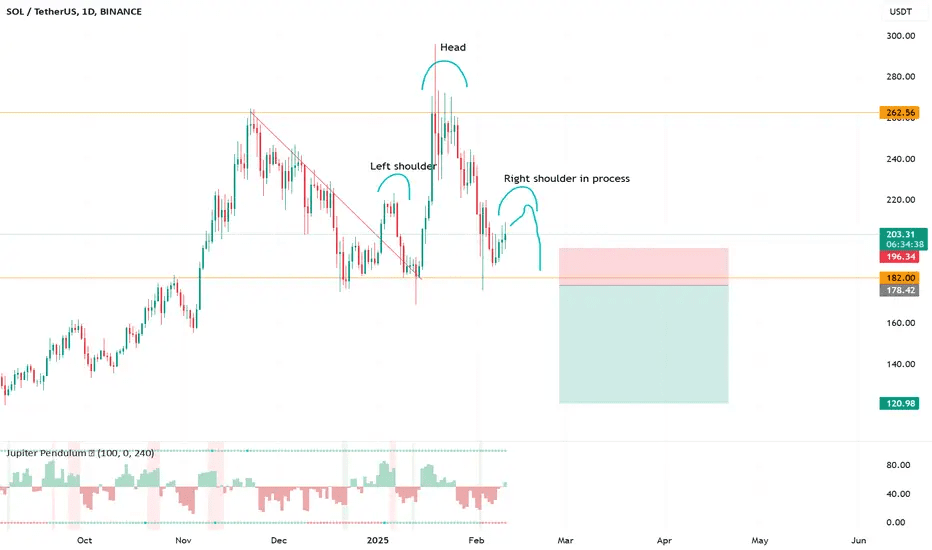
Firedancer introduces a new validator client designed for high throughput and fault isolation. Its independent codebase reduces systemic risk compared to the native client, offering a more robust infrastructure layer for institutional adoption.
Alpenglow upgrades the consensus layer to enable deterministic finality. This means transactions settle without the need for multiple confirmation rounds, reducing latency and providing the predictable execution environment required by financial institutions.

Track on-chain metrics such as transaction success rates, validator uptime, and latency during peak congestion. These data points provide concrete evidence of whether the infrastructure upgrades are delivering the promised stability and finality.
Step 2: Analyze Alpenglow’s deterministic finality
Alpenglow represents a fundamental upgrade to Solana’s consensus mechanism. It shifts the network toward deterministic finality, where transactions are confirmed immediately without the probabilistic wait times associated with older models. This change eliminates the "reorg" risk where blocks are reversed, a critical factor for high-value financial settlements.
For 2026 portfolio strategy, deterministic finality is a prerequisite for broader institutional participation. Financial entities require certainty that transactions are irreversible upon confirmation. The deployment of Alpenglow aligns Solana’s technical capabilities with the regulatory and operational standards of traditional finance, potentially unlocking new capital flows.
Step 3: Cross-reference with institutional adoption signals
Technical upgrades must be validated by real-world usage. Review official announcements from Blockdaemon and other infrastructure providers regarding institutional onboarding. Look for evidence of enterprise-grade service level agreements (SLAs) and dedicated institutional nodes being deployed on the upgraded network.
The combination of Firedancer’s resilience and Alpenglow’s finality creates a stronger foundation for Solana 2026. However, avoid conflating technical progress with immediate price appreciation. Focus on whether these upgrades are successfully attracting long-term institutional capital and reducing network downtime, as these are the true indicators of sustainable growth.
Track real-world asset tokenization volume
Real-world asset (RWA) tokenization represents the structural shift for Solana in 2026, moving the network beyond speculative cycles into sustained utility. While meme coins generate short-term attention, tokenized assets like Treasury bills, private credit, and real estate provide the consistent on-chain volume that supports long-term network value. Evaluating this trend requires tracking specific on-chain metrics rather than relying on general market sentiment.
To assess Solana’s RWA trajectory, compare the current state of tokenized assets against other major blockchain ecosystems. This comparison highlights Solana’s unique position in handling high-frequency, low-cost asset settlements.
The low transaction costs on Solana are a critical differentiator for tokenized RWAs. High fees on other networks often make the tokenization of smaller-value assets economically unviable. Solana’s ability to process thousands of transactions per second at minimal cost allows for the granular fractionalization of assets, which is essential for broadening the investor base.
When evaluating Solana’s 2026 outlook, focus on the volume of tokenized assets rather than just price action. A growing RWA sector indicates that institutional capital is actively using the network for settlement, not just speculation. This distinction helps separate fundamental network health from temporary market hype.
Monitor AI agent integration on-chain
Solana’s high throughput and minimal fees make it an attractive infrastructure for autonomous AI agents. These agents require reliable, low-latency execution for tasks such as arbitrage, data verification, and automated service payments. As 2026 approaches, tracking the volume of on-chain transactions initiated by non-human wallets provides a tangible signal of this integration.
To evaluate this trend, focus on identifying wallets that exhibit machine-like behavior patterns. Look for consistent, high-frequency interactions with decentralized exchanges or oracle services at regular intervals, often during low human activity hours. Primary data from block explorers can help distinguish these automated workflows from typical human trading, which tends to be more sporadic and reactive to market news.
Official on-chain analytics and developer documentation often highlight new agent-focused protocols or SDKs built on Solana. Monitoring the adoption of these tools offers a clearer picture of institutional or serious developer interest than speculative market commentary. A rising number of active agent wallets interacting with established DeFi protocols suggests growing trust in Solana’s stability for critical automated functions.
Evaluate the quality of these interactions rather than just the quantity. Are agents executing complex multi-step transactions that add value, or merely spamming simple transfers? Understanding the nature of the on-chain work helps determine if AI integration is becoming a foundational use case for the network or remaining a niche experimental feature.
Build a risk-adjusted Solana 2026 trends checklist
Before allocating capital to Solana in 2026, rely on verifiable on-chain metrics rather than speculative analyst forecasts. Use this checklist to audit the network's health, ensuring your investment thesis is grounded in primary data. Verify these four areas systematically to mitigate downside risk.
-
Network Stability: Confirm the average block time and failure rate via Solana Beach. A healthy network maintains consistent finality without frequent validator outages.
-
Active User Growth: Check daily active wallet counts on Solscan. Sustained user activity is a stronger indicator of long-term value than short-term price volatility.
-
Total Value Locked (TVL): Review TVL trends on DefiLlama. Rising TVL across diverse protocols suggests genuine institutional and retail confidence.
-
Developer Activity: Monitor GitHub commits and new project deployments. Continuous development activity signals that the ecosystem is innovating, not just speculating.
This checklist provides a framework for evaluating Solana's fundamentals. Always cross-reference these metrics with broader market conditions before making financial decisions.
Common solana 2026 price: what to check next
Evaluating Solana 2026 trends requires separating market sentiment from structural indicators. Analyst consensus and prediction markets offer data points, but they reflect probability, not certainty. The following questions address the most frequent inquiries regarding Solana's price trajectory and long-term valuation.
When evaluating these targets, prioritize on-chain metrics such as daily active addresses and transaction finality times over static price predictions. Price is a lagging indicator; network health is the leading one.
No comments yet. Be the first to share your thoughts!